
Sampson County Criminal Court Cases
Sampson County criminal court cases belong to North Carolina's unified court system. District Court handles misdemeanors, infractions, probable-cause proceedings, and other preliminary felony work. Superior Court is the trial court for felonies. A felony may therefore first appear on a District Court calendar before moving to Superior Court. That path is normal, not a sign that the charge was filed in the wrong place. Clinton, Roseboro, and Garland do not keep separate municipal criminal court files.
The Clerk of Superior Court maintains the docket, filed papers, orders, judgments, sentence data, and financial history for both trial levels. The official Sampson County Courthouse page shows the public records building at 101 E. Main St. in Clinton. The clerk's main number is 910-596-6600, and published counter hours are Monday through Friday, 8:30 a.m. to 5 p.m.
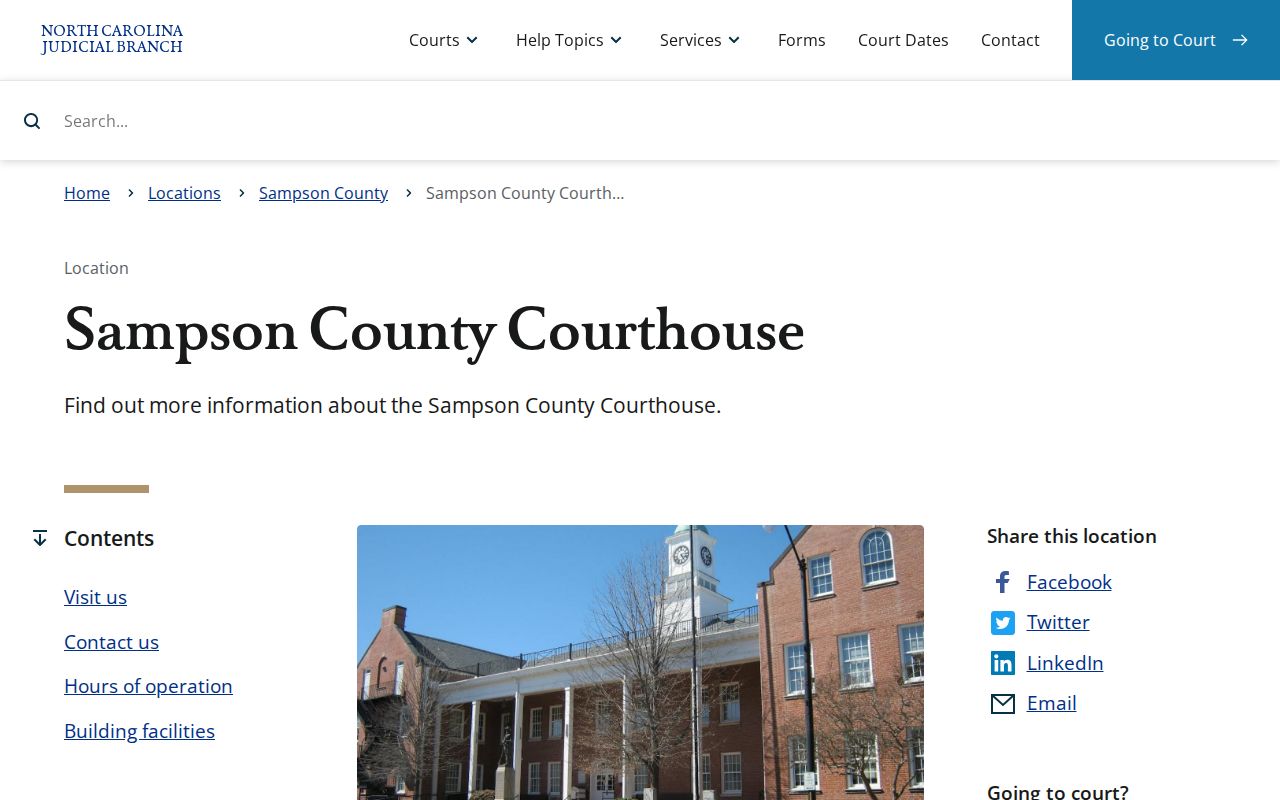
The courthouse image identifies the place where readers can inspect local case files and request certified court records.
Sampson Court Records Since 2025
The county joined North Carolina's eCourts Track 7 on February 3, 2025. The change brought Odyssey Enterprise Justice, electronic filing, and public Portal access to the county. Older instructions that point only to a clerk terminal may predate that launch. The web index is now a useful first stop, but older documents and items not shown online can still require clerk help.
The transition also explains mixed results. A local criminal case may have a current docket online while an older paper document remains available only from the clerk. Search the new system, then treat a gap as a reason to confirm the file rather than proof that no case exists.
Searching Sampson County Case Records
The North Carolina eCourts Portal provides the free statewide case index. Names work best when the legal spelling, middle name or initial, and county location are known. A case number is the stronger route because it avoids many common-name matches. Public displays can change as the platform is updated, so read the location and case type before relying on any result.
- Open Portal and choose the public case or party search.
- Enter a case number, or use the person's first and last name with a middle name when known.
- Narrow the location to Sampson County and limit the category to criminal or infraction records when that filter appears.
- Open the result and compare the case number, filed date, court location, charge, hearings, and disposition.
- Call or visit the Sampson clerk for a missing document, plain copy, or certified court record.
| Portal field | Type | Required | Use |
|---|---|---|---|
| Search type | Tab or menu | Yes | Choose case, party, or hearing search. |
| First name | Text | Unspecified | Use the legal spelling. |
| Middle name | Text | No | Helps separate people with similar names. |
| Last name | Text | Usually | Confirm identity with more than the name. |
| Case number | Text | Alternate | Best exact-match route when known. |
| Location or county | Dropdown | Advised | Select Sampson County. |
| Case type | Dropdown | No | Limit results to criminal or infraction matters. |
| Date range | Date fields | No | Narrows filings or hearings. |
Use the separate Court Dates page when the immediate need is the next setting. That search accepts a defendant name or citation and case number, then returns calendar information rather than the full docket. Confirm the county, session, and courtroom near the hearing date because calendars can change. If Portal and the calendar disagree, the Sampson clerk is the right source for current scheduling and the official file.
Sampson AOC-CR-314 Court Search
Portal is not the same product as a clerk's criminal-record search. Form AOC-CR-314 requests a county criminal-record search from the Sampson clerk for $25. The form uses the subject's name and other identifying details, the requested county, and delivery or certification information. It covers Sampson court records, not a statewide identity-linked history.
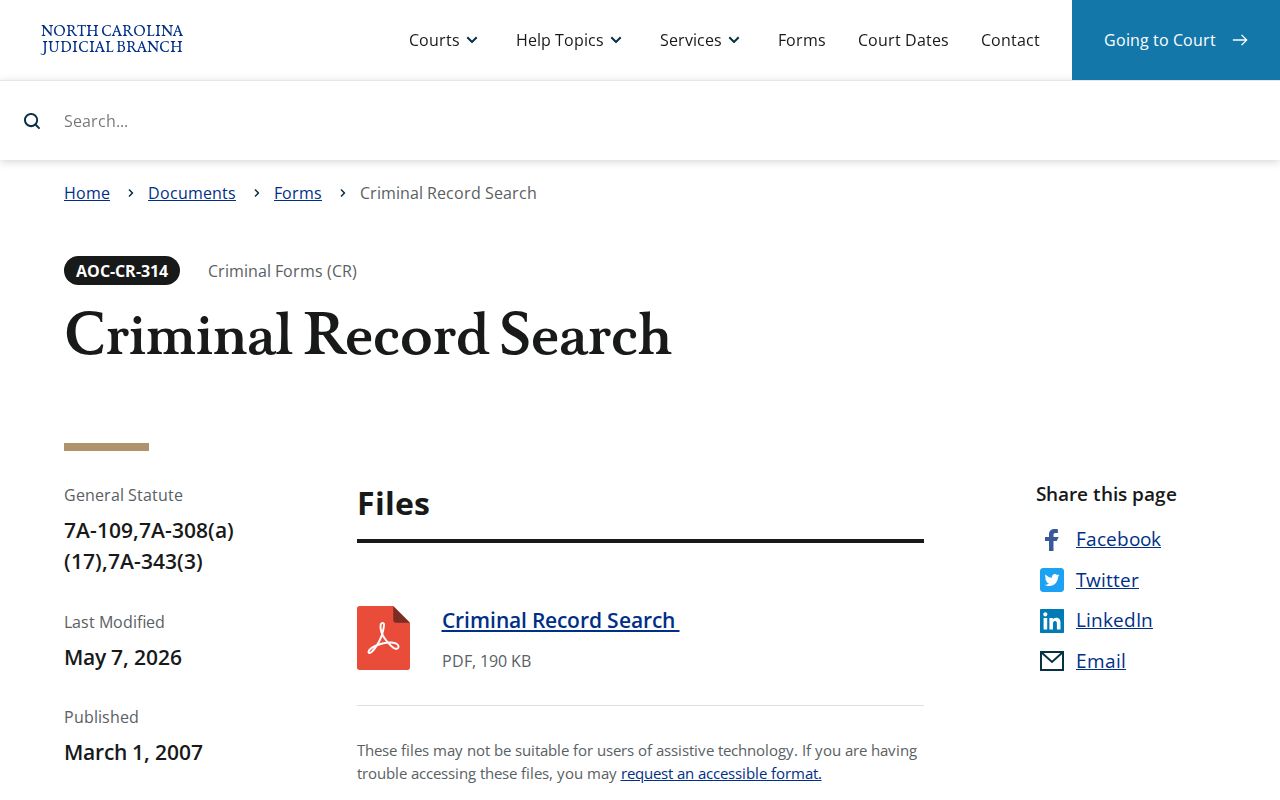
The captured form helps distinguish a paid county search from a free Portal query or a request for one named judgment.
Ask the clerk which service fits the need. A person may want a search for cases tied to one name, a plain copy from a known file, or a certified judgment. Those outputs are not interchangeable, and copy charges may differ. A Sampson County search also says nothing about cases filed in another North Carolina county.
Inside a Sampson County Case File
A court case file documents one prosecution. It may show the originating process, charge history, hearing events, motions, orders, plea, disposition, sentence, and money owed. The file is different from a jail booking, which records custody, and from the SBI repository history, which links fingerprint-supported arrest cycles to reported outcomes.
| Case number and court | Identifies the Sampson file, location, and trial level. |
|---|---|
| Charging document | Shows the warrant, summons, magistrate order, information where allowed, or indictment that supports the charge. |
| Docket entries | Lists filed events such as service, continuances, motions, pleas, trial activity, and orders. |
| Hearing dates | Records past settings and may display the next session, time, or courtroom. |
| Disposition and judgment | States how each charge ended, such as conviction, dismissal, or acquittal. |
| Sentence and costs | May show confinement, probation, restitution, court costs, and balances allowed for public view. |
Document availability varies. A docket line can confirm that an order was entered without providing the full order online. Protected identifiers, confidential victim details, juvenile information, and sealed or expunged matters do not become public merely because other fields appear.
Sampson Court Events and Dispositions
Events record what happened along the way. A continuance moves a setting, an indictment is a grand jury's formal felony charge, and an arraignment addresses charges and a plea. None of those terms supplies the final outcome. The disposition answers what happened to a specific charge. It may state conviction, dismissal, acquittal, or another legally recorded result.
- Disposition
- The recorded legal outcome of one charge.
- Nolle prosequi
- A prosecutor's formal decision not to proceed with the charge at that time.
- Judgment
- The court's formal ruling after a plea, verdict, or other resolution.
- Order for arrest
- North Carolina process directing custody, often after failure to appear or noncompliance.
Read each charge row because several charges in the same Sampson County case can end in different ways. When the event text is vague, obtain the filed order or certified disposition instead of guessing from an abbreviated docket label.
How a Criminal Case Moves
A Sampson County prosecution can start with a citation, criminal summons, warrant, magistrate order, or indictment, depending on the charge and procedure. A magistrate handles an early judicial stage and release conditions. District Court resolves misdemeanors and conducts felony preliminary work, while a felony trial belongs in Superior Court.
Case flow: Charges Filed › Arraignment › Pretrial › Plea or Trial › Disposition › Sentencing
The District Attorney for Prosecutorial District 5 handles Sampson prosecutions along with matters in Duplin, Jones, and Onslow counties. The clerk, not the prosecutor, remains the records custodian for the public case file. The arresting agency separately keeps its incident and arrest paperwork.
Certified Sampson Criminal Judgments
When Portal lists a docket but withholds the document, contact the Sampson Clerk at 910-596-6600. Give the case number when possible and state whether a plain copy or certified copy is needed. A certified copy bears the clerk's official authentication. It is more useful than a screenshot when the exact language of a judgment, sentence, or dismissal must be confirmed.
The Sampson court contact directory separates the clerk, judges, District Attorney, and other local court offices.
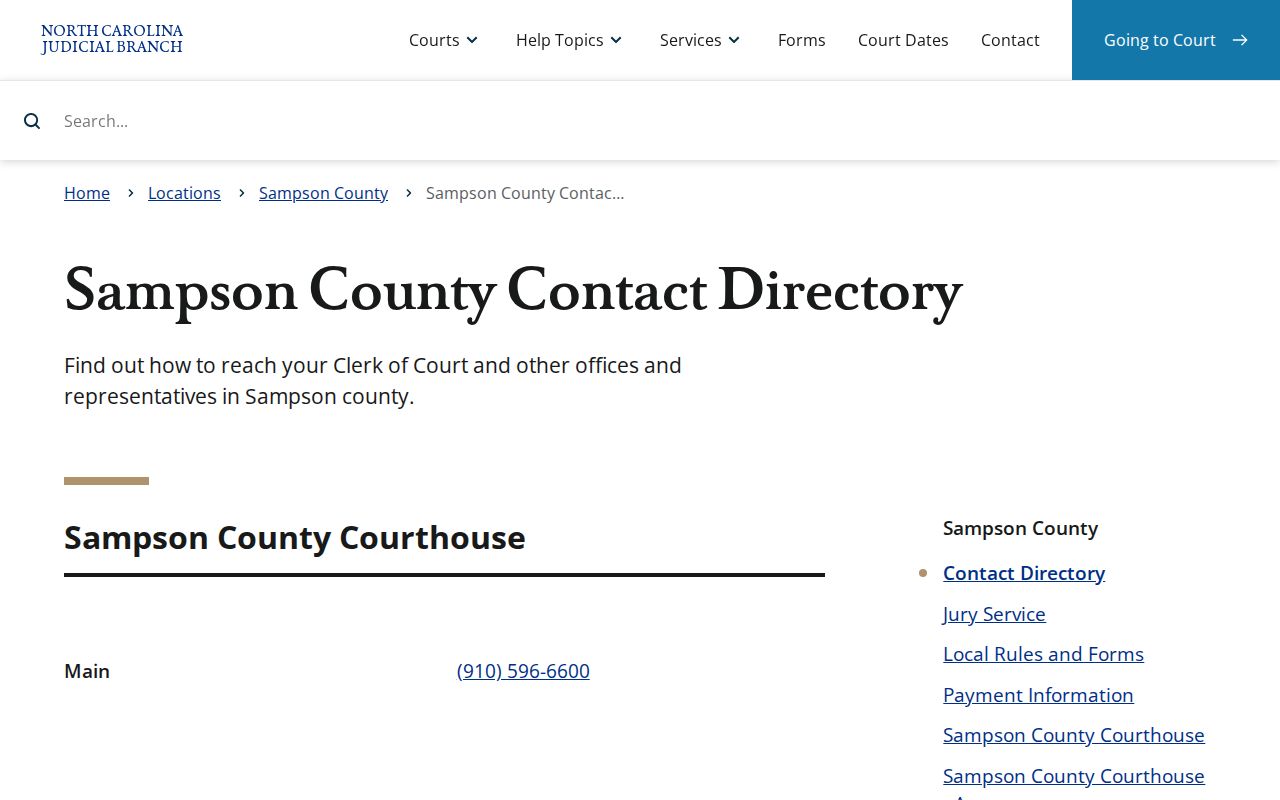
That directory helps route a record request to the clerk instead of sending it to a judge's office or the prosecution.
Case Record Access & Restrictions
North Carolina law directs clerks to keep court records open for inspection subject to statutes, court rules, and orders. G.S. 7A-109 is the central clerk-access authority. Juvenile files, sealed or expunged matters, protected victim data, confidential addresses, and other restricted details do not belong in the ordinary public view.
The Judicial Branch Court Dates search is a narrower tool. It accepts a defendant name or citation and case number to locate an upcoming setting, but it is not a complete Sampson County criminal history.
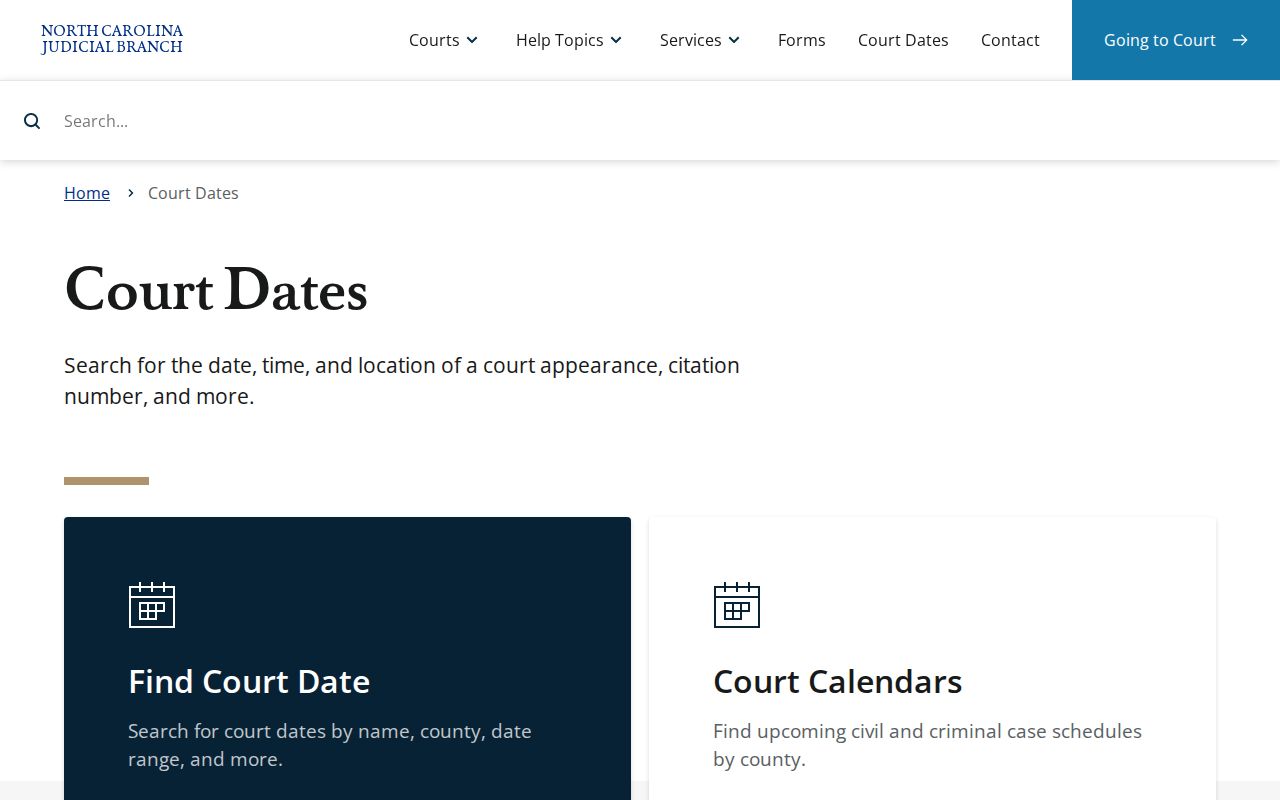
The court-date screen is best used to confirm when and where a known Sampson matter is scheduled, with a clerk call close to the hearing if the calendar changes.
Public access also differs from permission to record a proceeding. Courthouse screening and posted electronics rules still apply even when a case file is open for inspection. Contact the clerk in advance when language access or other scheduling help is needed at the records counter.
Sampson Felonies Across Two Courts
A felony can begin with preliminary work in Sampson District Court and later move to Superior Court for trial. District Court may handle the first appearance, a probable-cause setting, or other early matters. That does not turn District Court into the felony trial court. Read the location and event text to learn which stage the docket reflects.
A federal prosecution is a different system, not the next level of a Sampson state felony. Federal criminal cases arising in the county belong to the U.S. District Court for the Eastern District of North Carolina, and the county clerk cannot supply their indictments or docket documents.
PACER is the federal case-search channel. Registration is required, and usage fees are governed by the current federal schedule and quarterly waiver policy.
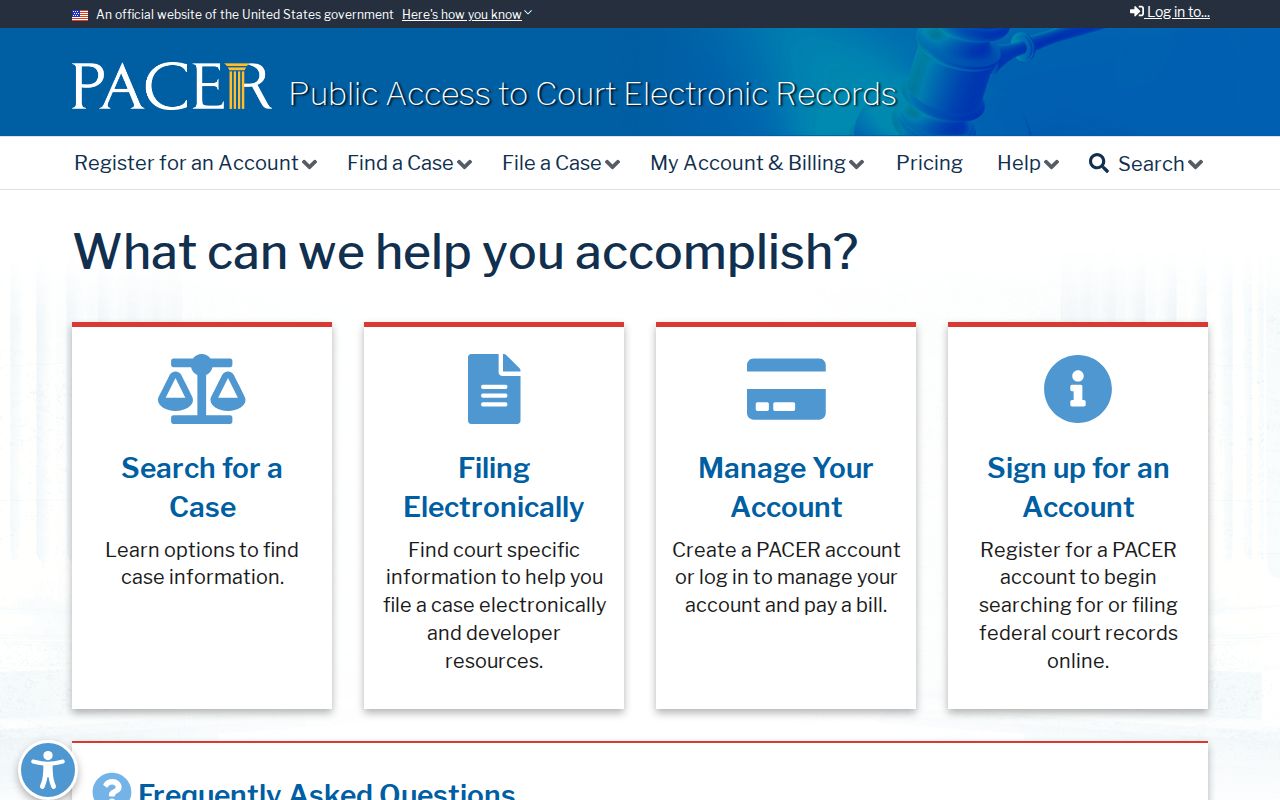
The PACER image marks the separate federal layer, while Sampson District and Superior Court records remain in North Carolina's state system.